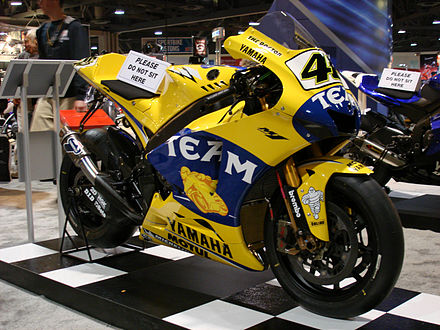
Category: Yamaha
-
2000 Victory V92C Maintenance Guide
Periodic Maintenance Chart
Spark Plug
Engine Oil Level
Engine Oil and Oil Filter Replacement
Air Filter
Brake System
Clutch Adjustment
Lubrication Points
Sidestand Pivot
Front Fork Inspection
Fuse Replacement
Headlight Adjustment
Drive Belt Inspection
Spring Pre-Load Adjustment
Rear Wheel Alignment Inspection & Adjustment
Battery
LCD display function
Troubleshooting
Periodic Maintenance ChartITEMPROCEDUREInitialOdometer readingsI= Inspect L = Lubricate R = Replace T = Torque500miles or 1 month2,500miles or6 months5,000miles or 12 months7,500miles or 18 months10,000miles or24 months12,500miles or30 monthsValve ClearanceNot necessary. Your Victory motorcycle engine utilizes hydraulic valve lash adjusters.Spark Plug-Check condition-Adjust gap and clean-Replace every 30,000milesICrankcase Ven-tilation System-Check ventilation hose forcracks or damage-Replace if necessaryIIIIIFuel Lines-Check fuel hoses forcracks or damage-Replace if necessaryIIIIIFuel Filters-Replace every 17,500milesR(17,500Miles)Exhaust System-Check for leakage-Retighten if necessary-Replace gaskets if neces- saryTIITIIBatteryInspect terminal condition and tightness. Check open cell voltageIIIIIIThrottle OperationCheck for smooth operation. Throttle should return to the idle positionIIIIIIClutch Cable FreeplayAdjust cable free play and inspect for smooth operationIIIIIIEvaporative-Check control system forIemission controldamage.system (for Cali–Replace if necessaryfornia only)Engine Oil and Oil FilterReplaceRRRRRRAir Filter·InspectReplace if necessaryIIIIIICompressionPressureInspect engine compression and recordIIIIII- Requires special tools, data and technical skills for servicing. Take the motor cycle to a Victory dealer when these items need servicing.NOTE: For odometer readings or time periods higher than 12,500 miles or 30 months, repeat the same maintenance as listed in the table from the 2,500 mile in terval.* The airfilter needs more frequent service if you are riding in unusually wet or dusty conditions.Periodic Maintenance ChartITEMPROCEDUREI = Inspect L = Lubricate R = Replace T = TorqueInitialOdometer readings500miles or 1 month2,500miles or6 months5,000miles or 12 months7,500miles or 18 months10,000miles or 24 months12,500miles or 30 monthsBrake SystemReplace brake fluid every 30,000 miles or 24 months. Check/replace pads if nee- essary. Inspect operation of brakelight switches.IIIIIIDrive BeltAdjust tension and align- ment. Inspect for damage and wear. Replace every 30,000 miles. Have dealer inspection annually.IIIIIIHeadlight AimInspect and adjust as necessaryIIIIIIControl CablesApply cable lubeILLLLLRear Swing Arm PivotCheck bearing assembly for looseness.IIIIIIBrake/ Clutch lever pivot shaftApply light weight greaseLLLLLBrake pedal / Shift pedal shaftApply light weight greaseLLLLLSidestand PivotCheck operation and ap- ply light weight greaseILLLLLSidestand PadInspect, replace if neces- saryIIIIIFront ForkCheck operation and for leakage; Replace fork fluid every 15000 miles or 24 monthsIIIIRIRear ShockCheck operation and for leakage.IIIIILSteering BearingsCheck bearing assembly for looseness and adjust as necessaryRepack every 15,000 milesIIIIIIWheel BearingsCheck bearings for smooth operationIIIIIIRear Shock Pivot BearingApply light weight greaseLTiresInspect for wear and dam- age. Adjust tire pressureIIIIIINuts, Bolts, fas- tenersInspect fastener torque, – as necessaryIIIIII- Requires special tools, data and technical skills for servicing. Take the motor cycle to a Victory dealer or refer to the service manual when servicing these items. NOTE: For odometer readings or time periods higher than 12,500 miles or 30 months, repeat the same maintenance as listed in the table from the 2,500 mile in terval.Spark PlugSpecified Spark PlugRA8GHC ChampionSpark Plug Gap0.040″ (1.0 mm)Tightening Torque12-14 ft. lbs.imageThe condition of the spark plugs can often times indicate abnor mal engine conditions. They are important engine components and are easy to check. Refer to page 13 for spark plug location.You should periodically remove and inspect the spark plugs be cause heat and deposits will cause any spark plug to erode away its electrodes. If electrode erosion is excessive or if foreign deposits are excessive, you should replace the spark plug with the specified spark plug.Normally, both of the spark plugs from the same engine should have the same color on the spark plugs center insulator. The ideal color is a medium tan color for a mo torcycle being operated normally. If one or more spark plugs show a distinctive dif ferent color it could be an indication of an engine problem. Do not attempt to diag nose such problems yourself. Have your Victory dealer determine what, if anything, is wrong with your motorcycle.Always measure the electrode gap with a wire type thickness gauge before instal ling new or used spark plugs in your engine. If necessary, adjust the electrode gap to the specifications.Before installing the spark plugs, clean the gasket surface. Ensure that the spark plug’s threads are clean and undamaged. It is a good idea to put a drop of clean engine oil or a very small amount of anti-seize compound on the spark plug’s threads before installation. Tighten the spark plugs to the specified torque value.&,CAUTION Do not over-tighten or under-tighten the spark plug. Looseness can cause pre-ignition because heat is not dissipated through the threads. Exces sive tightness can damage the threads of both the cylinder head and spark plug.Engine Oil LevelUse the following procedure to check the engine oil level.imageWarm up the machine for several min utes.Stop the engine and wait 3-5 minutes.Remove the dipstick and clean the oil off of the dipstick.Place machine on a level area and hold it in an upright position.Check the engine oil level with the mo torcycle held upright, 3-5 minutes after having been run with the dipstick screwed in and seated.Remove the dipstick and read the oil level. The oil level should be between the maximum and minimum marks. If the level is low, add oil to raise it to the specified level.Engine Oil and Oil Filter ReplacementAcAur10Nimageimagef:)/Drain PlugOil FilterAn oil filter wrench is required when replacing the oil filter. Take your machine to a Victory dealer or refer to the service manual when replacing the oil filter.Warm up the engine for sev eral minutes.Stop the engine. Securely support the machine on its sidestand.AcAur10NTake care not to upset the machine while working on it.Place an oil pan under the engine and remove the oil filler cap.Remove the drain plug and drain the oil.Remove the oil filter.Reinstall the drain plug with a new sealing washer (if the used washer is dam aged) and tighten it to 28 ft. lbs.Apply a light coat of engine oil to the 0-ring of the new oil filter. Make sure the 0-ring is seated properly.Engine Oil and Oil Filter Replacement (Continued)imageimageInstall the new oil filter. Tight en the filter one full turn after O-ring contacts engine case.Fill the engine with 6 quarts of oil and install the oil filler cap.Check the dipstick again af- ter filling..&.cAUTIONDo not put in any chemical additives. Victory’s motorcycle oil has been specially designed for this application and any additional additives are not necessary and have not been tested by Victory.Take care not to allow foreign material to enter the crankcase.Start the engine and warm it up for several minutes. While warming up, check for oil leaks. If any leaks are found, stop the engine immediately and determine the source of the problem before starting the engine again. Consult your Victory dealer if you cannot determine or repair the source of the problem.After the engine is started, the oil indicator light should go off..&.cAUTIONimagej 6 quarts (6.7 liters)Oil and Filter ChangeOIL QUANTITYIf the indicator light flickers or remains on, immediately stop the engine and take your motorcycle to a Victory dealer.TIGHTENING TORQUEDrain Plug28 ft. lbs. (3.9 kg-m)Oil Filter1 full turn after O-ring contacts the sealing surfaceAir FilterInspect the air filter on a regular basis. Inspect more often if riding in unusually wet or dusty conditions. Replace filter if necessary. Refer to page 35 for maintenance schedule. Refer to page 13 for filter location.imageimageAccess CoverAir Filter’1P’– ,:;-·… ::.-,:::;. ;;:.-Apply lubricant to edge of filterTo remove the air filter .. ,access cover, remove the two screws securing the cover to the unit.Slide the “panel type” air filter out to inspect.Replace filter.NOTE: If replacing with a new filter, it may be helpful to apply a small amount of lubrication to the edge of the filter to allow it to slide in more easily.Reinstall the access cover.Brake System,&WARNING: Be sure the brakes are working properly. A soft or spongy feel ing in the brake lever or pedal can indicate the presence of air in the brake system. This air must be removed by bleeding the brake system before the motorcycle is operated. Air in the system will cause greatly diminished braking capability and can result in loss of control and an accident. Have a Victory dealer inspect and bleed the brake system if necessary.Brake Pedal Freeplay Adjustmentimageimageu5-8 mm freeplayMeasure pedal freeplay travel as illustrated. The freeplay measurement should be 5 – 8 mm whenlight downward pressure isapplied to the pedal. NOTE: No movement of the master cylinder piston should occur.If the pedal freeplay is outside of specification, loosen the locking nuts and turn the adjustment rod in or out as necessary to achieve the correct brake pedal freeplay.Tighten the lock nut and verify that the rear wheel rotates freely without drag orFluid Level InspectionAWARNING: Low brake fluid levels may let air enter the brake system, possi bly creating poor on non-existent braking. Before riding, check the levels of thebrake fluid and add if necessary. (see page 13 for location of rear brake reservoir) Observe the following precautions:imageMinimum Level When checking the level of the brake fluids, make sure the mas tercylinder is level. It may be nec essary to move the handlebars or stand the motorcycle upright.Use only DOT 4. Otherwise, leak age or poor brake performance may result.Refill with the same type brake fluid. Mixing different types of fluids may result in detrimental chemical reactions and lead to loss of braking performance.imageRear Master Cylinder ReservoirDo not let water enter the master cylinder when refilling. Water will significantly lower the boiling point of the fluid and may result in non operative braking.Brake fluid attacks many painted surfaces and plastic parts. Al ways clean up spilled fluid imme diately with large quantities of wa ter and mild detergent.A lowering of the brake fluid level is normal as the brake pads wear. If you notice a constant or sudden lowering of the brake fluid level, have your Victory dealer inspect your machine for the cause of the problem.Front Brake Pad InspectionimageWear Indicator GroovesFour wear indicator grooves are provided on each front brake pad. These indicators allow for a visual indication of brake pad wear without disas sembly of the caliper. Inspect the grooves, if they have al most disappeared, have a Vic tory dealer replace the brake pads.Rear Brake Pad InspectionimageThe rear brake pads do not have wear indicator grooves but rely on chamfers (A) for wear indication. When the pads are worn to the point that the chamfer no longer exists, on the end with the wear indi- cator (B), the brake pads must be replaced.Brake Pad ReplacementWhen it is determined that brake pads need to be re placed, take your motorcycle to a Victory dealer.Clutch Adjustmentimageimageimage,,Adjustment Lock NutSleeveI .080″/2mmMake certain the clutch is work ing properly.Operate the clutch a few times and check for smooth operation and proper free-play (.080″/2mm).If the free-play is incorrect, loos en the lock nut and turn the ad justment sleeve until free-play is correct. Tighten the lock nut af ter you are finished.If the operation of the clutch cable is not smooth, ask your Victory dealer to inspect the op eration and determine if any re pair or lubrication is needed.NOTE: Starter interlock is de pendent on the clutch lever free play being set correctly to as sure activation of the clutch safety switch.Lubrication PointsNOTE: Steering head bearings should only be serviced by a Victory Technician.NOTE: Pure Moly Lube Polaris starter grease should be used for cable lube (PN2871460).imageSeat CableClutch Cable Fast Idle CableimageSwing Arm PivotRear Shock PivotThrottle Cables & Throttle HousingControl Lever PivotsSidestand PivotimageWear Mark on PadSupport the motorcycle in an upright position.Inspect the sidestand spring for damage or loss of tension.Inspect the sidestand for smooth movement. Lubricate if necessary.Inspect the sidestand pivot bolt nut for proper torque (36 ft. lbs. – 5.0 kg-m)).Make sure that the sidestand is not bent. If it is, it must be replaced. Do not attempt to straighten the sidestand if it is bent.Inspect the sidestand’s rubber pad for wear. Be sure the pad is secured properly in place. Replace the pad when it is worn beyond the wear mark.Front Fork InspectionimageimageACAUTION: Securely support the motorcycle so there is no danger of it falling.Oil Leak CheckCheck for oil leakage. If any leakage is detected, take the machine to a Victory dealer for repairs.Operation CheckPlace the machine on a level place. Hold the machine in an upright position and apply the front brake. Push down hard on the handlebars several times to determine if the forks operate smoothly. Check for loose steer ing or abnormal noise. Check tightness of all fasteners..A.CAUTIONIf unsmooth movement, dam age, looseness or abnormal noise is detected in front fork, take your motorcycle to a Victory dealer for inspection.AWARNING: Do not operate a motorcycle with faulty suspension. Loose, dam aged,worn or improperly adjusted suspension parts impair vehicle stability and control.Rear Wheel Alignment Inspection & AdjustmentSee your Victory dealer for wheel alignment inspections and adjustments.Fuse ReplacementimageThe fuses are located on the left side of the mo torcycle under the left body side cover.To access the fuses, remove seat.Rotate fasteners 1/4 turn counter clockwise and lift upward until disengaged.Pull top of cover outward (toward you) until cover is clear of the battery.Push cover down to disengage locating pin on bottom of cover. Set cover aside.Push back the tabs on each side of the fuse box cover and lift cover off. NOTE:the cover must be installed with the double cut-out (1) facing forward.Fuse Size for ApplicationSpecified FuseSizeMain Fuse “A”10 amp “Blade” type fuseMain Fuse “B”20 amp “Blade” type fuseAll other fuses10 amp “Blade” type fusesIf any fuse is blown, turn off the main switch and determine which fuse is blown. Install a new fuse of the specified amperage. Turn on the switches and see if the system operates correctly. If the fuse blows again, see your Victory dealer.ACAUTION Do not use fuses of a higher amperage rating than what is speci fied. If the correctly rated fuse continues to blow, something is wrong and needsto be corrected. Substituting a higher amperage fuse can lead to extensive electri cal system damage and possibly a fire.imageHEADLAMP RELAYomFUEL PUMP RELAYStarter I-ECMomFuel PumpDiode -Im1 HornHeadlampom, BrakeMain IgnitionFlasher IgnitionomITO POWER CORDECM RELAYIGNITION RELAYFuse Box DiagramimageimageHeadlight AdjustmentInspect tire pressures, correct if necessary.Select a level area with low lighting and enough room to place the motorcycle’s front tire 25 feet from the wall or temporary screen.Measure from the center of the headlight to the floor. Draw a horizontal line on the wall or screen that equals this measurement.Have someone who is approximately the same weight as the primary rider sit on the motorcycle.Place the motorcycle upright with the handlebars centered and turn on the high beam of the headlight.The top of the light beam must be even or below the horizontal line on the wall or screen.The light beam should project evenly to the right and left of the motorcycle’s center line.If headlight adjustment is necessary, remove the headlight bezel by removing screw. Turn the headlight aiming screws in or out as needed.imageimageAimingScrews ::::—–[:. ::;,Bezel ScrewReinstall headlight bezel.Drive Belt InspectionNOTE: It is recommended that your Victory dealer inspect the drive belt annually.Visually inspect the drive belt for cuts, excessive wear, foreign substance (oil, etc.), missing teeth, delamination of the outer belt covering, or any unusual damage.If any damage is found, the belt should be replaced. See Victory dealer if your belt needs to be replaced.Drive Belt Sprockets InspectionInspect sprockets for wear or damage from foreign material or an accident. See your Victory dealer for replacement if damage is found.Drive Belt Tension InspectionimageBelt Tension GaugeSecure the motorcycle in an upright position.Place a tape measure or ruler next to the belt in the location shown.Place the O-ring on the 10 lb. mark of the belt tension gauge.Determine the center of the belt and place the belt tension gauge squarely against the belt.Push up on the belt tension tool. When the O-ring just touches the tool body, belt deflection should be 8mm (0.31″).ACAUTION The belt tension gauge must be kept at a 90° angle to the beltin order to obtain an accurate measurement.If the belt moved more than 8mm, with 1O lbs. of force, the belt must be tightened. If the belt moved less than 8mm, with 10 lbs. of force, the belt must be loosened.See your Victory dealer for drive belt tension adjustment.Spring Pre-Load AdjustmentThe rear shock pre-load adjustment should be set to insure the bike has the correct amount of suspension travel and ground clearance. NOTE: Two or three people will be required to make this adjustment.Remove the motorcycle from its sidestand and balance it on the two wheels. Compress the rear suspension a couple of times by pushing down on the seat and releasing. The suspension should move freely without binding.imageMeasure from the center of the rear axle to the center fender attachment bolt. Refer to illustration.Load the motorcycle as it is intended to be ridden. This could include rider, passenger, riding gear, and any cargo or accessories.Measure again from the center of the rear axle to the center fender attachment bolt. Again with the bike balanced on the two wheels, compress the rear suspension a couple of times as in step 1. Make certain the suspension moves freely without binding.imageimageSpanner Wrencho~:·Decrease\_vCamJSubtract the second measurement from the first. The resulting number is called “sag,” and should be between 0.5 and1.0 inches. If it’s not, the pre-load must be adjusted.To adjust the pre-load, remove the driver’s seat and tool kit from the right side cover. Use the spanner wrench to increase or decrease pre-load. Refer to illustration.After making the adjustment, repeat the measurement procedure until the sag equals0.5 to 1.0 inches. If the proper sag cannot be obtained, the motorcycle may be overloaded. Consult your Victory dealer for additional assistance.Rear Wheel Alignment Inspection & AdjustmentNOTE: The swingarm has an indicator washer with reference marks to be used for positioning the rear wheel. Before removing the wheel, note the relationship of the reference marks on the washer and swingarm. When reinstalling the wheel, reposition it to this location.imageSwing ArmReference MarkIndicator WasherSecure the machine in an upright position.When wheel alignment is correct, inspect belt tension and adjust as necessary.Continue working back and forth between belt tension adjustment and wheel alignment adjustment until both are correct. (Refer to Victory Service Manual.)Tighten rear axle nut to specification and install new cotter key. (Refer to Victory Service Manual.)Tighten wheel adjuster bolts lightly.Tighten wheel adjuster lock nuts.Pump the rear brake pedal several times until the pedal is firm.See your Victory dealer for rear wheel alignment inspection and adjustment.imageBattery electrolyte is poisonous. It contains sulfuric acid. Serious burns can result from contact with skin, eyes or clothing. Antidote:External: Flush with water.Internal: Drink large quantities of water or milk. Follow with milk of magnesia, beaten egg, or vegetable oil. Call physician immediately.Eyes: Flush with water for 15 minutes and get prompt medical attention.Batteries produce explosive gases. Keep sparks, flame, cigarettes, etc. away. Ventilate when charging or using in an enclosed space. Always shield eyes when working near batteries. KEEP OUT OF REACH OF CHILDREN.A WARNINGBatteryThis motorcycle is equipped with a maintenance free battery and is located under the left frame cover. It is not necessary to check the electrolyte or add distilled water to the battery. If the battery discharges, see your Victory dealer.&.cAUTIONWhenever removing the battery, disconnect the negative (black) cable first. When reinstalling the battery, connect the negative (black) cable last.Do not remove the battery cables while the engine is running. Doing so may dam age the Electronic Control Unit (ECU).Take great care not to reverse the battery leads when installing the battery. Re verse power applied to the ECU will damage it instantly.Battery ConnectionsBattery terminals and connections should be kept free of corrosion.If cleaning is necessary, remove the corrosion with a stiff wire brush. Wash with a solution of one tablespoon baking soda and one cup water. Rinse well with tap water and dry off with clean rags. Coat the terminals with dielectric grease or petro leum jelly.Battery StorageWhen the motorcycle is not used for periods of one month or longer, remove the battery and store it in a cool, dry area. The battery should be recharged monthly using a 12 volt battery charger with a maximum charge rate of 2 amp-hr.imageimageMode SwitchSet SwitchMFD FunctionsOdometerTrip OdometerClockBacklight dimmingHi-Beam DimmingFuel LevelVoltmeterCheck EngineMODE SWITCH – Toggles all Multi-LCD display functions except “Check Engine.” The indicator scrolls from left to right, displaying selection.SET SWITCH – Function varies with selected function mode. It’s used to set the clock, to select English or metric while in “ODO” mode and resets the trip odometer while in trip mode.ODOMETER – Default function on LCD when starting the machine. It accumulates the distance of the vehicle. The global numeric system can be toggled between English and metric by pressing the SET button for 3 seconds while in this function. Pressing the mode button will change to the next LCD function.TRIP ODOMETER – This function also accumulates and stores distance but can be reset to zero by pressing the SET button for3 seconds while in this mode. TRIP Ml or TRIP KM indicators are on when in this mode (depending on the current nu meric system of choice). Pressing once the MODE button will change to the next LCD function.CLOCK – the clock function on the LCD shows the time. The CLOCK indicator is on when in clock mode. You must be in CLOCK mode to set the time. To set the time, hold SET key for 3 seconds (hours digits start flashing), press SET to select the hour and MODE to enter the set hour; the first digit of minutes will begin to flash. press SET to select the number and MODE to enter it; continue with this procedure for the final digit. After the last digit is entered, the display will return to normal op erational mode (colon flashing). After the clock is set, pressing the MODE button will change to the next LCD function.BACKLIGHT DIMMING – the intensity of the backlight of the module can be changed to one of 6 levels by pressing the SET button. The LCD display will show in bars the proportional part of the dimming. Pressing the MODE button will change to the next LCD function.HIGH BEAM INDICATOR DIMMING – The intensity of the high beam indicator can be set to one of 4 levels by pressing the SET button. The LCD display will show HB followed by bars, indicating the proportional part of the dimming. In this mode, the DIM indicator is still on and pressing the MODE button once will change to the next LCD function.FUEL – Fuel of the vehicle will be shown on the LCD display in gallons or liters ac cording to the current numeric system of the module. The range goes from Oto 5 gallons. In this function all indicators will be off, pressing the MODE button onceVOLTMETER – The voltage of the battery will be shown on the LCD display. (i.e.Alt 12.3). In this function, all indicators will be off, pressing the MODE button once will change back to the first LCD function.CHECK ENGINE – In this function, the microcontroller is checking the the Check Engine input line; the LCD will be shown CH Eng every time this line turns low. This screen will be on for a period of two seconds every 5 seconds as long as the Ch Engine line remains low.imageimage(!J aI-wI-0(f)z-Iw-w_,:3 =i(/) a:(/)LL 0Ia:z-(!J aI-wI (f)-0I-w w_,:3 =i(/) a:(/)LL 0Ia:(!J aI-w0″u'(“/)”{“)”I-0 (f)z-(/) a:Iw-(/)w _J_JuIw-:3 =i(/)LL 0Ia:w::;;0a:Iw-(/)”””1. a:tr{“)1–w1–::;;0 – I-0 w(/)wWOotl!oimageimageimageimagea:0>-1f–fCOi<_j>=(!J::Jz(!JLL.image-I-ean.C C0-I=icw/:0a: wimageimageIw-::;;000(“/) ‘imageimageimage”{“)Iw-(/)imageTroubleshootingVictory motorcycles receive a rigid inspection before shipment from the factory. However, trouble may occur during operation.Any problem in the fuel, combustion, or ignition systems can cause hard starting and loss of power. If your motorcycle requires any repair, take it to your Victory dealer.The skilled technicians at a Victory dealership have the tools, experience, and know-how to properly service your motorcycle. Use only genuine Victory parts on your motorcycle. Imitation parts may look like Victory parts but are often inferior. Consequently, they have a shorter service life and can lead to expensive repair bills or a hazardous operating condition.CleaningComplete and thorough cleaning of your Victory motorcycle will accomplish many things, such as:Extend the useful life of many components.As a part of the cleaning process you will also be performing a complete and thorough visual inspection that may reveal items in need of repair that you might otherwise not find.Enhance the value of your motorcycle.Extend the useful life of many cosmetic items. Before cleaning your motorcycle do the following:Block off the end of the exhaust pipes to prevent water from entering theexhaust system.Make sure the spark plugs and all filler caps are securely installed.Avoid spraying the air filter assembly.NOTE: Degreaser may be applied to excessively greasy areas. If you choose to use such a product, do not apply the degreaser to any cosmetically painted or plated areas. Also, do not apply the degreaser to any areas that depend upon grease for proper functioning such as brake and shifting pivot points. If degreaser is necessary in these areas, make sure to re-grease the affected areas after your cleaning is finished.Rinse the dirt and degreaser off with a low pressure garden hose.&.cAUTIONExcessive hose pressure may cause water seepage into bearings and pivoting or sliding areas. Wheel bearings, transmission seals and electrical parts can become damaged if excessive pressure is used.The use of extremely high pressure washing wands (such as coin operated car washes) are the cause of many expensive repair bills.Once the bulk of the dirt has been rinsed off, wash all surfaces with warm water and a mild detergent.Rinse the motorcycle off immediately with clean, low pressure water and dry the surfaces with a chamois cloth or clean soft absorbant cloth.Repetitive polishing and cleaning will accelerate the wear of your tank badge.StorageTo prevent storage damage due to long-term storage (60 days or more) the follow ing guidelines should be followed.Clean the motorcycle completely.Top off the fuel tank with fresh fuel and add fuel stabilizer to the fuel. The ma chine should be run for 15 minutes or so to distribute the fuel stabilizer through out the fuel system.Change the engine oil as outlined on page 38.imageBlocksSet floor jack under the center of the engine. Raise Vehicle off the floor and set 2 blocks underneath the bike as shown. Set bike down on blocks.Block the frame to take some of the weight off of both the front and rear wheels. (See illustration)Secure a plastic bag over the exhaust outlets to prevent moisture from entering the exhaust system. IMPORTANT: Make certain the system is cool prior to securing the plastic.Remove the battery and charge it. Store it in a cool, dry area. The battery should be recharged monthly using a charger that uses tapering current, not a constant current type charger. This will prevent overcharging, which is the most common cause of battery damage. -
2000 Victory Sport Cruiser Maintenance
Periodic Maintenance Chart
ITEM PROCEDURE
I = Inspect L = Lubricate R = Replace T = TorqueInitial Odometer readings 500
miles or 1 month2,500
miles or 6 months5,000
miles or 12 months7,500
miles or 18 months10,000
miles or 24 months12,500
miles or 30 monthsValve Clearance Not necessary. Your Victory motorcycle engine utilizes hydraulic valve lash adjusters. Spark Plug Check condition Adjust gap and clean Replace every 30,000 miles I ✓ Exhaust System Check for leakage Retighten if necessary Replace gaskets if neces- sary T I I T I I ✓ Battery Inspect terminal condition and tightness. Check open cell voltage I I I I I I ✓ Throttle Operation Check for smooth operation. Throttle should return to the idle position I I I I I I ✓ Clutch Cable Freeplay Adjust cable free play and inspect for smooth operation I I I I I I Engine Oil and Oil Filter Replace R R R R R R Air Filter * Inspect
Replace if necessaryI I R I R I ✓ Compression Pressure Inspect engine compression and record I I I I I I Brake System Replace brake fluid every 30,000 miles or 24 months.; Check and re- place pads if necessary; Inspect operation of brake light switches. I I I I I I ✓ Drive Belt Adjust tension and align- ment; Inspect for damage and wear; Replace every 30,000 miles I I I I I I Headlight Aim Inspect and adjust as necessary I I I I I I Control Cables Apply cable lube I L L L L L ✓ Rear Swing Arm
PivotCheck bearing assembly
for looseness.I I I I I I Sidestand pivot Check operation and ap-
ply light weight greaseI L L L L L ✓ Front Fork Check operation and for
leakage; Replace fork fluid every 15000 miles or 24 monthsI I I I R I ✓ Rear Shock Check operation and for
leakage. Complete shock service every 15,000 milesI I I I I L ✓ Steering
BearingsCheck bearing assembly
for looseness and adjust as necessary
Repack every 15,000 milesI I I I I I ✓ Wheel Bearings Check bearings for
smooth operationI I I I I I ✓ Tires Inspect for wear and dam-
age. Adjust tire pressureI I I I I I Nuts, Bolts, fas-
tenersInspect fastener torque, –
as necessaryI I I I I I ✓ Crankcase Ven- tilation System Check ventilation hose for cracks or damage Replace if necessary I I I I I ✓ Fuel Lines Check fuel hoses for cracks or damage Replace if necessary I I I I I ✓ Brake / Clutch
lever pivot shaftApply light weight grease L L L L L ✓ Brake pedal /
Shift pedal shaftApply light weight grease L L L L L ✓ Rear Shock
PivotApply light weight grease L ✓ Evaporative emission control system (for Cali- fornia only) Check control system for damage.
Replace if necessaryI ✓ Fuel Filters Replace every 17,500 miles R
(17,500
Miles)✓ – require special tools, data and technical skills for servicing. Take the motorcycle to a Victory dealer when these items need servicing.
NOTE: For odometer readings or time periods higher than 12,500 miles or 30 months, repeat the same maintenance as listed in the table from the 2,500 mile in- terval.
* The air filter needs more frequent service if you are riding in unusually wet or dusty conditions.
Spark Plug Inspection
Engine Oil Level
Engine Oil and Oil Filter Replacement
Air Filter
Brake System
Clutch Inspection
Lubrication Points
Sidestand Pivot
Front Fork Inspection
Fuse Replacement
Headlight Adjustment
Drivebelt Inspection
Spring Pre-Load Adjustment
Ride Height Adjustment
BATTERY
-
Yamaha X-1
The Yamaha X-1 is a commuter-style motorbike that is manufactured in Thailand. The motorbike is designed to compete with the 110 cc Honda Wave and the Suzuki Smash, a city commuter-style motorbike.
Motor
The Yamaha X-1 is powered by a 2-valve, 4-stroke, 110 cc motorcycle. It is a low-RPM motor that uses air cooling. Designed to beat Honda Wave 125 in performance and fuel efficiency.
Statistics
Stat Name Statistic Size (cc) 110.3 cc (110) Bore x Stroke 51.0 x 54.0 mm Max power 8.8 hp / 8,000 rpm Max Torque 0,92 kgf.m / 5,000 rpm Max Speed 120 km/h 0–100 km/h Unknown Max RPM Unknown Engine Type 4 stroke SOHC 2valve Carburetor Mikuni VM-17 Brake Type Disk (front), Drum (rear) Fuel Tank Capacity 4.5 liters Fuel Consumption 86.0 km/liter at 30km/hr running speed See also
- Honda Sonic 125
- Yamaha X-1R
References
-
Yamaha Zuma 125
Yamaha YW125 Yamaha Zuma 125Manufacturer Yamaha Motor Company Also called BW’s 125 Production 2009-present Class Scooter Engine 123.4 cc (7.53 cu in) forced air-cooled 4-stroke single cylinder;
SOHC, 4-valve;
Electronic Fuel Injection;
Bore x Stroke – 52.4 x 57.9 mm
Compression Ratio = 10:1Transmission Dry centrifugal automatic clutch; V-belt automatic CVT Suspension Front – 27 mm Telescopic Forks
Rear – Dual ShocksBrakes Front – 220 mm disc
Rear – drumTires Front – 120/70-12 51L
Rear – 130/70-12 56LWheelbase 50.8 in (1,290 mm) Dimensions L: = 75.2 in (1,910 mm)
W: 30.1 in (760 mm)Seat height 30.7 in (780 mm) Fuel capacity 1.3 US gal (4.9 L) Fuel consumption 89 mpg‑US (2.6 L/100 km) Related Yamaha Zuma The Yamaha Zuma 125 is a scooter introduced by Yamaha Motor Company in September 2008 and updated in 2016. It is a 125 cc version of its smaller 49cc cousin, the Zuma. Outside the United States it is known as the Yamaha BW’s 125.
Model information
Japanese model BW’s 125 The body design of the Zuma 125 is similar to the Zuma in respect to its overall form and dual headlight configuration. Its size is slightly larger, and it includes a metal bracket around the headlights. The Taiwanese, Japanese and South American models have stacked front lights with a single headlight. The bulbs used are HS1 styled halogen lights.
It is intended as a street-bike, with the capacity for handling light off-road conditions such as unpaved roads. Many of the design components like the steel frame, wide tires, oiled-type air filters, robust shocks, and front/rear off-road-style brush deflectors were included to facilitate both riding conditions.
Engine
The engine is a 123 cc 4-stroke SOHC 4-valve with 10:1 compression. The fuel injection system is similar to the ones installed on most Yamaha bikes, and uses a 24mm injector. The exhaust manifold comes equipped with an O2 sensor. The rated power output is close to 8 bhp (6.0 kW). After the break in period, the Zuma 125 can achieve a maximum speed of around 61 mph (98 km/h).
This same engine (minus the fuel injection) is also used in Yamaha’s Cygnus-X scooter. There is currently an established aftermarket with numerous parts that allow the engine to be enlarged up to 287 cc. Depending on driving style and riding conditions, the Zuma 125’s fuel economy is around 89 mpg‑US (2.6 L/100 km).
2016 Update
The bike was updated technically and cosmetically in 2016. The dual independent headlamps were replaced by a single unit with integrated dual lamps, one for low beam and one for high beam.
References
External links
- Yamaha official Zuma home
- 2020 Yamaha Zuma 125 specifications
-
Yamaha Zuma
Yamaha Zuma Manufacturer Yamaha Also called BWs, MBK Booster Production 1988-2011 Class Scooter Engine Horizontal Minarelli 49 cc air-cooledtwo-stroke, electronic ignition
Bore x stroke: 40.0 mm x 39.2 mm
Compression ratio: 7.0:1Power 1.9hp Transmission V-belt automatic Suspension Front: Telescopic fork
Rear: Single shockBrakes Front: 115mm disc
Rear: drumTires Front: 120/90-10
Rear 130/90-10Wheelbase 50.2 in (1,275 mm) Dimensions L: 74.4 in (1,890 mm)
W: 27.8 in (706 mm)
H: 43.7 in (1,110 mm)Seat height 30.1 in (765 mm) Fuel capacity 1.5 US gallons (5.7 L) Fuel consumption 123 mpg‑US (1.91 L/100 km) Related Yamaha Zuma 125 The Yamaha Zuma is an air-cooled 49 cc two-stroke scooter made by Yamaha Motor Company. It is also marketed as the Yamaha BWs, and the MBK Booster.
The Zuma has a 14 mm Teikei carburetor with automatic choke, reed-valve induction, a fan-assisted cooling system, an autolube oil-injection system with an indicator light located on instrument panel which alerts rider when oil level gets low, and electric starting with backup kick start.
It also has five spoke-cast wheels with 120/90-10 front and 130/90-10 rear tires. The front fork has 2.6 inches (66 mm) of travel, and rear shock has 2.4 inches (61 mm) of travel. The scooter also has 155 mm hydraulic front disc brakes and rear drum brakes. (Models until 1998 had front drum brake instead of a hydraulic one.)
The dual seat contains a storage compartment adequate for a single full-face helmet. The rear cargo rack can be used for additional carrying capacity but requires the use of ropes or bungee cords to secure any load. This rack can also function as passenger grabrails. Post-2001 Zumas have “bug-eyed” dual headlights that come with one light wired to low beam and the other wired to high beam (both lamps have filaments for high and low beam functions, however, and many users install an inexpensive and simple wiring modification to make both headlamps light with both the high and low beams). The instrument panel has turn signal indicators, a high beam indicator, a low-oil indicator, a speedometer, a gas level gauge, and an odometer.
Yamaha specifies that the Zuma can safely carry up to 315 lb (143 kg) of passengers and cargo. Yamaha took the Zuma off the market in the U.S. in 2006 and 2007, and then reintroduced the model in 2008–2011. The models from 2008 to 2011 have a slightly higher gear ratio that helps compensate (at the expense of a little less power on take-off).
In 2011 Yamaha introduced the Zuma 125, followed in 2012 by the Zuma 50f (which replaced the 2-stroke version), both 4-stroke fuel-injected models.
Model codes
Yamaha numbers its scooter models according to their make (in the case of the Zuma, all models manufactured between 1989 and 1990 as well as those made between 1997 and 2001 inclusive begin with the letters CW, and those made after 2001 have model numbers beginning with the letters YW) followed by the engine size (given in approximate cubic centimeters— the Zuma’s usual 49 cc 1.7 hp engine is assigned the number 50) and the year in which the vehicle was made, given as either a one or two letter designation and increasing by one “letter category” each full year, with an optional letter placed either before or after the year letter category and considered an amendment code. For example, the letter designation for the year 2002 for the Zuma was the letter P, so a Zuma manufactured in 2002 would have the designation YW50P. However, Yamaha made some changes to the model during its year run, so some Zumas manufactured in 2002 have the model code YW50AP to distinguish them from the YW50P model.
All YW50P Zumas are identical in construction design to all other YW50P Zumas but will differ (in this particular instance, only slightly) from a YW50AP. Yamaha did not use the letter Q, and the letter for 2003 is the letter R (there was only one model for this year, the YW50R). For 2004, the letter S (the YW50S model). In 2008, assigned the letter X, Yamaha had two models: the YW50XL and the YW50XB, and so on. In 2011 the numbering system moved to the letter A (YW125AB for the 125 CC model and YW50AL for the 49 CC model).
Fuel economy
The United States Environmental Protection Agency mileage estimates for the Zuma are up to 123 mpg‑US (1.91 L/100 km; 148 mpg‑imp), depending upon how it is ridden, maintenance, road conditions, cargo, and driver/passenger weight.
1989-2001 Zuma Production 1989-2001 Engine Vertical Minarelli 49 cc air-cooled, carbureted 2-stroke, electronic ignition
Bore x stroke: 40.0 mm x 39.2 mm
Compression ratio: 7.0:1Transmission V-belt automatic Suspension Front: Telescopic fork
Rear: Single shockBrakes Front: 155mm disc;drum on earlier models
Rear: drumTires Front: 125/90-10
Rear 125/90-10Wheelbase 50.2 in (1,275 mm) Dimensions L: 68.3 in (1,735 mm)
W: 24.8 in (630 mm)
H: 41.5 in (1,054 mm)Seat height 29.3 in (744 mm) Fuel capacity 1.1 US gallons (4.2 L) References
-
Yamaha YZR500
Yamaha YZR500 1975 Yamaha YZR500 (OW23)Manufacturer Yamaha Motor Company Production 1973–2002 Predecessor Yamaha YZ634A Successor Yamaha YZR-M1 Engine two-stroke
OW23: 494.7 cc (30.19 cu in) inline-4
OW54: 498.5 cc (30.42 cu in) U engine
OW61: 498.5 cc (30.42 cu in) 60° V4
OWK1: 494.7 cc (30.19 cu in) 70° V4Bore / stroke 54 mm × 54 mm (2.1 in × 2.1 in)
56 mm × 50.6 mm (2.20 in × 1.99 in)Power 0WL9: 142 kW (190 hp) @ 10,500 rpm Related Yamaha TZ750 The Yamaha YZR500 was a 500 cc Grand Prix racing motorcycle made by Yamaha from 1973 to 2002. It achieved significant acclaim, especially during the 1980s and 1990s.
the 1989 version of bike ridden by American Wayne Rainey Racing history
The YZR500 was ridden by championship winners Giacomo Agostini (1975), Kenny Roberts (1978, 1979, 1980), Eddie Lawson (1984, 1986, 1988) and Wayne Rainey (1990, 1991, 1992).
Phillip McCallen won the Macau Grand Prix in 1996.
Chronology
Year Model Constructors’
championship1973 0W20: Liquid-cooled, inline-4, two-stroke engine, chromoly frame. Yamaha’s first 500cc factory bike won from the outset at the first round of the 1973 season, ridden by Jarno Saarinen. 2nd 1974 0W23: Yamaha’s first machine created specifically for 500cc racing. Yamaha won their first 500cc constructors’ championship with it and in 1975 Giacomo Agostini rode the 0W23 to a world championship as well as giving Yamaha their second 500cc constructors’ championship. 1st 1975 1st 1976 For 1976 as the factory Yamaha team was dismantled, the 0w23 was handed to Venemotos for Johnny Cecotto, but Cecotto soon discarded the 500 because it was obsolete compared to the factory Suzuki and even to the RG Mk1 production racers. 2nd 1977 0W35: Changes were made to the valve intake system, stroke ratio, and carburetor. 2nd 0W35K: Introduction of Yamaha’s Power Valve System (YPVS). Kenny Roberts won his first of three championships with it. 1978 2nd 1979 0W45 2nd 1980 0W48: Introduction of an aluminum frame to the YZR500. 2nd 0W48R: At round 4 of the season, the YZR500 returned to a steel frame, and the engine had the outer cylinders reversed and thus rear-directional exhaust. 1981 0W53: Same rear-directional exhaust as the 0W48R, and the aluminum frame used a squared cross-section. Last inline-4 YZR500. 2nd 0W54: Square-4 engine, rotary disc valve. 1982 0W60 Updated square-4 machine 2nd 0W61: The first Japanese V4 engine in a 500cc Grand Prix motorcycle. Also had a new frame structure that was the basis for the Deltabox frame, which was developed by Spanish engineer Antonio Cobas. 1983 0W70: Introduction of the aluminum Deltabox frame and designed specifically for a 17-inch front wheel (from 18 inches). 2nd 1984 0W76: Crankcase reed valve system. Eddie Lawson wins the rider championship with it. 2nd 1985 0W81: Re-designed V-4 engine. Eddie Lawson won the riders’ championship with it. 2nd 1986 1st 1987 0W86: Improvements to the exhaust and cooling systems. 1st 1988 0W98: A new exhaust layout of both pipes going under the engine and out the right side required an asymmetrical swingarm. Eddie Lawson won the riders’ championship on it. 1st 1989 0WA8: Introduction of a data-recording device. 2nd 1990 0WC1: Wayne Rainey won his first riders’ championship on it. 1st 1991 0WD3: New regulation came into effect: the minimum weight would be 131 kg (for the four cylinders bikes). Yamaha used in this year first (and last) chip controlled suspension (CES). 1st 1992 0WE0: In the latter half of the season, Yamaha introduced their own “big-bang” firing order to the YZR500. Third championship for Wayne Rainey. 2nd 1993 0WF2: An extruded aluminum frame was designed to resist flex from increased power output, though Wayne Rainey complains that it is too stiff, and in round 8 Rainey switches to a chassis used by Team ROC. 1st 1994 0WF9: Re-design of the fairing and introduction of ram-air intake. 3rd 1995 3rd 1996 0WJ1: New alloy for the engine and new design for the frame. 2nd 1997 0WH0: The “V” was widened to allow a larger air box. The 0WJ1 and 0WH0 were developed simultaneously and used in reverse order during the season. 2nd 1998 0WK1: Move to unleaded fuel. 2nd 1999 2nd 2000 0WK6: General improvements to the engine, frame and cowl. 1st 2001 0WL6 2nd 2002 0WL9: The 28th and last generation of the YZR500 had to compete against the newly allowed 990cc 4-stroke machines. 2nd See also
- Honda NSR500
- Suzuki RGV500
- Kawasaki KR500
- MV Agusta 500 Four
- Honda RC181
- Honda RC174
Notes
External links
- Official Yamaha page for the history of the YZR500 (in Japanese)
-
Yamaha YZR-M1
Yamaha YZR-M1 Yamaha YZR-M1 used by Rossi in the 2004Category MotoGP Constructor Yamaha Predecessor Yamaha YZR500 Technical specifications Chassis Twin-spar aluminium deltabox frame, multi-adjustable steering geometry, wheelbase, ride height, with aluminium swingarm Suspension (front) Fully adjustable Öhlins inverted telescopic forks Suspension (rear) Braced aluminium swingarm with single Öhlins shock and rising-rate linkage Length 2,060 mm (81 in) Width 650 mm (26 in) Height 1,150 mm (45 in) measured from identical reference plane Wheelbase 1,450 mm (57 in) Engine Yamaha 1,000 cc (61 cu in) I4, 16-valve, DOHC, four valves per cylinder, crossplane crankshaft naturally aspirated Transmission 6-speed sequential manual cassette-type Weight 160 kg (353 lb) excluding rider
225 kg (496 lb) including riderFuel ENEOS Lubricants ENEOS Tires Michelin Competition history Notable entrants Yamaha Motor Racing
Tech3
d’Antín MotoGP
Sepang Racing Team
RNF Racing
Notable drivers Max Biaggi
Carlos Checa
Olivier Jacque
Shinya Nakano
Norifumi Abe
Alex Barros
Marco Melandri
Valentino Rossi
Colin Edwards
Rubén Xaus
Toni Elías
James Ellison
Makoto Tamada
Sylvain Guintoli
Jorge Lorenzo
James Toseland
Ben Spies
Cal Crutchlow
Andrea Dovizioso
Bradley Smith
Pol Espargaró
Maverick Viñales
Johann Zarco
Jonas Folger
Hafizh Syahrin
Fabio Quartararo
Franco Morbidelli
Darryn Binder
Álex Rins
Debut 2002 Japanese Grand Prix Races Wins Poles 272 109 105 Constructors’ Championships 5 Drivers’ Championships 7 The Yamaha YZR-M1 is an inline-four motorcycle specifically developed by Yamaha Motor Company to race in the current MotoGP series. It succeeded the 500 cc (31 cu in) YZR500 by the 2002 season and was originally developed with a 990 cc (60 cu in) engine. Since then, the YZR-M1 has been continuously developed into several iterations through the 990cc, 800cc and 1000cc eras of Grand Prix Motorcycle Racing.
2002–2003
2002 was the first season that allowed 990 cc 4-strokes to be raced alongside 500 cc 2-strokes. In a change from their V-4 YZR500, Yamaha designed the YZR-M1 (for “Mission One”) with an inline-4 engine because it was the format considered to have the best mutual balance with the frame. Yamaha wanted to preserve the superior handling of the YZR500, so the M1’s engine was designed to fit in a chassis developed around the basic structure of the YZR500. The M1 used an electronic engine management system that controlled the engine braking endemic to four-strokes. The new engine had five valves per cylinder, was fed by carburetors and began with a displacement of 942 cc; in the second half of the season it progressed to the full 990 cc regulation limit. The frame design also evolved during the season, with adjustment of the engine mounting position and change in the fuel tank shape.
The M1 was test-ridden and developed by Max Biaggi, John Kocinski, Norihiko Fujiwara and Kyoji Namba throughout 2001. It was raced in the 2002 season by Biaggi and Carlos Checa on the factory team, and towards the end of the season M1s were also provided to Norifumi Abe, Olivier Jacque and Shinya Nakano. Biaggi achieved two wins and placed second in the final standings as did Yamaha in the manufacturers’ championship.
In 2003, the engine went from carburetion to fuel injection, and the engine brake control system was replaced with an Idle Control System that automatically adjusted the throttle valve opening on two of the four cylinders to improve stability and handling during deceleration. M1 riders were Checa, Alex Barros, Olivier Jacque, Marco Melandri, Shinya Nakano and Norifumi Abe, and there were no wins and Yamaha came in third in the manufacturers’ championship.
2004/2005
Valentino Rossi signed a two-year contract with Yamaha, reportedly worth in excess of US$6 million per season, in a move that was described by the press as “biting off more than he could chew”. It was widely felt not only by his critics and media pundits but also by many fans, that even he would not be able to bring the struggling YZR-M1 up to the level of the hitherto all-conquering Honda RC211V. A well-publicised increase in the pace of development of the Honda machine over the winter season fuelled expectation that in the hands of riders of the calibre of Max Biaggi and Sete Gibernau it would have no problem in retaining the World Title for Honda.
However, Rossi wasn’t the only defection Honda had to contend with; Jeremy Burgess (crew chief for Rossi at Honda) and the majority of his long-established crew were convinced by Rossi to join him at Yamaha. This was a shrewd move and was cited by Rossi in his autobiography as instrumental in providing him with the strong basis necessary for launching an attack on the Championship with the YZR-M1.
During 2003/2004 winter testing, Yamaha pulled out all the stops in their collaboration with Rossi and Burgess. Through a systematic regime of innovation and testing, they sought to refine the M1’s traditionally strong traits such as good braking and quick handling (which impressed Rossi), and marry them to good balance and transition to power. Yamaha engineers under YZR-M1 project leader Koichi Tsuji experimented with a number of engine modifications in an attempt to fix the power delivery, and finally it was decided to go ahead with a four valve per cylinder head configuration (as opposed to the earlier five-valve head), with a specially refined cylinder firing order. This turned the straight four-cylinder engine from a traditional “screamer”, where the power pulses are spaced equally (every 180 crank degrees), into a so-called “long bang” engine where the power pulses are grouped unevenly across the cycle (270-180-90-180). This firing order yields the constant kinetic energy of a V4 engine while maintaining the desirable engine packaging of a traditional inline four-cylinder. These developments significantly improved the torque characteristics of the engine, and coupled with slight changes to the position of the engine in the chassis made the M1 much easier to control at the limit of adhesion while exiting corners. After a frantic winter of development and testing, the team showed the world that they had made a significant step in the right direction, when Rossi and the M1 won the BMW car at the 2004 pre-season IRTA test at Catalunya, by posting the fastest lap of the open session (similar to normal race qualifying).
The traditional first race of the season at Suzuka did not occur because of safety considerations and so the 2004 season started at Welkom in South Africa. In a quite remarkable race, Rossi came through to claim the victory, not only silencing his critics but becoming the first man in history to win two GPs back to back with different manufacturers. Rossi went on to claim eight more GP wins on his way to win the 2004 Championship, with a tally of 304 points. Honda riders Sete Gibernau and Max Biaggi took second and third with 257 and 217 points respectively.
The 2004 season gave Rossi the opportunity he had sought: to prove that it was his talent rather than just the bike that had won him his championships. In so doing, he also achieved one of the great coups in the history of Motorcycle Racing.
The YZR-M1 and Rossi partnership continued to dominate in 2005 when the Championship was won by a massive 147 point margin over Honda rider Marco Melandri in second place. The 2005 M1 was hailed by insiders to be a great race bike: Yamaha with input from Rossi had created a race bike to beat the others quite easily. Rossi later said that the 2005 M1 was the greatest bike he had ever ridden.
2006
Valentino Rossi’s 2006 Yamaha YZR-M1 The 2006 season proved a little more problematic for Yamaha. The M1 suffered from chatter from the very first race of the year. It was a recurring problem for all Yamaha riders in the first third of the season, and was thought to be a function of three major winter season developments: a significant increase in engine power, a new, stiffer, chassis and a new construction of Michelin tire with an even stickier compound and revised profile. Because the three developments occurred almost simultaneously, the usual meticulous testing of one development at a time was compromised and it took much of the early season to understand and overcome the problems.
This setback for Yamaha and the YZR-M1 was largely responsible for Valentino Rossi’s mediocre start to the 2006 season, manifest by poor qualifying performances and a brace of bad luck. At midseason he suffered a wrist injury, which added to his woes. In the final third of a memorable season, the M1’s problems were virtually eradicated, and Valentino Rossi turned in a string of performances that almost closed a large points gap on Championship leader Nicky Hayden aboard the Honda RC211V. It was only in the final race of the season that the M1 and Valentino Rossi were beaten by just five points and Yamaha relinquished the Championship to Honda. Hayden won only two races that season, and later stated that Rossi deserved to be the champion, but luck and DNFs cost him the championship. Valentino Rossi won 5 races in 2006 to Nicky Hayden’s 2, a fact that was well played during the offseason.
2007
Regulations again changed for the 2007 season with the capacity of MotoGP machines reduced to 800 cc in an effort by the FIM to reduce the ever-increasing speeds of the 990 cc bikes (capable of well in excess of 210 mph (340 km/h)); therefore the YZR-M1 continued in 800 cc form. In post-2006 and in 2007 pre-season testing, the new 800 cc equipped YZR-M1 (along with other 800 cc MotoGP bikes) was quicker straight out of the box than the 990 cc version of the M1. This was by virtue of later, harder braking, quicker handling, higher corner speeds, and more controllable traction, and as the 2007 season began the 800 cc YZR-M1 was expected to get quicker as its development continued.
The chatter that plagued the early 2006 YZR-M1 was eliminated in the switch to 800 cc. The main sponsor for the Official Factory Yamaha Team switched from Camel, with their distinctive yellow and blue livery, to that of the Italian motor manufacturer Fiat. The team ran initially in a blue and white colour scheme and hinted at the unusual intention of running a variety of colour schemes throughout the season.
Casey Stoner won the 2007 Championship with the factory Ducati.
2008
Rossi won the 2008 Championship, by a record margin and dominated podium finishes all season. Teammate Jorge Lorenzo managed a first-ever Rookie win on the M1 at the Portuguese GP, and had 6 podium finishes.
2012
For the 2012 season, the maximum engine capacity was increased to 1,000 cc (1.0 L; 61.0 cu in), with a limit of 4 cylinders and a maximum 81 mm cylinder bore. Jorge Lorenzo won the 2012 Championship, closely followed by Dani Pedrosa.
Specifications
Yamaha YZR-M1 Specifications Engine Engine type: Liquid-cooled four-stroke, inline 4-cylinder with cross-plane crankshaft, DOHC 16-valve Displacement: 998 cc (1.0 L; 60.9 cu in) Ignition: Magneti Marelli with adjustable mapping – NGK spark plugs Fuel System: Fuel injection Fuel: TotalEnergies Lubricants: Motul (factory; 2002–2007), (Tech3; 2003–2018) & (Pramac; 2025–present)
Petronas (factory; 2008–2011) & (SRT/RNF; 2019–2022)
ENEOS (factory; 2012–present)Lubrication system: Wet sump Data recording: 2D Maximum power: Around 249 PS/183 kW Maximum speed: In excess of 340 km/h (211 mph) Exhaust: Akrapovič Transmission Type: 6-speed cassette-type gearbox, with alternative gear ratios available Primary drive: Gear Clutch: Dry multi-plate slipper clutch Other speed specifications: 0-200MPH 16.95 seconds, 0-60MPH 1.91 seconds Final drive: Chain Chassis and running gear Frame type: Twin-spar aluminium deltabox frame, multi-adjustable steering geometry, wheelbase, ride height, with aluminium swingarm Front suspension: Fully adjustable Öhlins inverted telescopic forks Rear suspension: Braced aluminium swingarm with single Öhlins shock and rising-rate linkage Front/rear wheels: MFR forged magnesium 17” inch front and rear Front/rear tires: Michelin, 17” front and rear, available as slick, intermedium and wet tires Front brake: Twin 320 mm or 340 mm carbon discs with radial mounted four-piston Brembo calipers Rear brake: Single 220 mm ventilated stainless steel disc with twin-piston Brembo caliper Weight: Minimum 160 kg (353 lb) excluding rider, 200 kg (441 lb) including rider, in accordance with FIM regulations Fuel capacity: 22 L (6 US gal; 5 imp gal), in accordance with FIM regulations Successes
These results are accurate up to the 2022 Dutch TT.
- World Championship titles:
- Constructors: 5 (2005, 2008, 2009, 2010, 2015)
- Riders: 8
- Valentino Rossi 4 times (2004, 2005, 2008, 2009)
- Jorge Lorenzo 3 times (2010, 2012, 2015)
- Fabio Quartararo 1 time (2021)
- Teams: 7
- Gauloises Fortuna Yamaha (2004)
- Gauloises Yamaha Team (2005)
- Fiat Yamaha Team (2008, 2009, 2010)
- Movistar Yamaha MotoGP (2015, 2016)
- Races won: 125:
- 2002: Biaggi 2 (2 in total)
- 2004: Rossi 9 (9 in total)
- 2005: Rossi 11 (11 in total)
- 2006: Rossi 5 (5 in total)
- 2007: Rossi 4 (4 in total)
- 2008: Rossi 9, Lorenzo 1 (10 in total)
- 2009: Rossi 6, Lorenzo 4 (10 in total)
- 2010: Lorenzo 9, Rossi 2 (11 in total)
- 2011: Lorenzo 3, Spies 1 (4 in total)
- 2012: Lorenzo 6 (6 in total)
- 2013: Lorenzo 8, Rossi 1 (9 in total)
- 2014: Rossi 2, Lorenzo 2 (4 in total)
- 2015: Lorenzo 7, Rossi 4 (11 in total)
- 2016: Lorenzo 4, Rossi2 (6 in total)
- 2017: Viñales 3, Rossi 1 (4 in total)
- 2018: Viñales 1 (1 in total)
- 2019: Viñales 2 (2 in total)
- 2020: Quartararo 3, Morbidelli 3, Viñales 1 (7 in total)
- 2021: Quartararo 5, Viñales 1 (6 in total)
- 2022: Quartararo 3
- Poles: 121:
- 2002: Biaggi 4, Checa 1 (5 in total)
- 2004: Rossi 5, Checa 1 (6 in total)
- 2005: Rossi 5 (5 in total)
- 2006: Rossi 5 (5 in total)
- 2007: Rossi 4, Edwards 2 (6 in total)
- 2008: Lorenzo 4, Rossi 2, Edwards 1 (7 in total)
- 2009: Rossi 7, Lorenzo 5 (12 in total)
- 2010: Lorenzo 7, Rossi1, Spies 1 (9 in total)
- 2011: Lorenzo 2 (2 in total)
- 2012: Lorenzo 7 (7 in total)
- 2013: Lorenzo 4, Crutchlow 2 (6 in total)
- 2014: Rossi 1, Lorenzo 1 (2 in total)
- 2015: Lorenzo 5, Rossi 1 (6 in total)
- 2016: Lorenzo 4, Rossi 3 (7 in total)
- 2017: Viñales 5, Zarco 2 (7 in total)
- 2018: Zarco 2, Rossi 1, Viñales 1 (4 in total)
- 2019: Quartararo 6, Viñales 3 (9 in total)
- 2020: Quartararo 4, Viñales 3, Morbidelli 2 (9 in total)
- 2021: Quartararo 5, Viñales 1 (6 in total)
- 2022: Quartararo 1
Complete MotoGP results
(key) (results in bold indicate pole position; results in italics indicate fastest lap)
Year Tyres Team No. Rider 1 2 3 4 5 6 7 8 9 10 11 12 13 14 15 16 17 18 Points RC
Points TC Points MC 2002 M JPN RSA SPA FRA ITA CAT NED GBR GER CZE POR RIO PAC MAL AUS VAL Marlboro Yamaha Team
3 Max Biaggi
Ret 9 DSQ 3 2 4 4 2 2 1 6 2 Ret 1 6 3 215 2nd 356 2nd 272 2nd 7 Carlos Checa
3 5 Ret Ret 4 3 3 Ret 4 5 2 Ret 5 7 11 Ret 141 5th 45 Wataru Yoshikawa
12 4 25th — Antena 3 Yamaha d’Antin
6 Norifumi Abe
DNS 10 6 (129) 6th 142 6th Gauloises Yamaha Tech 3
19 Olivier Jacque
Ret 8 9 15 (81) 10th 149 5th 56 Shinya Nakano
6 13 6 23 (68) 11th 2003 M JPN RSA SPA FRA ITA CAT NED GBR GER CZE POR RIO PAC MAL AUS VAL Gauloises Yamaha Team
4 Alex Barros
8 5 5 3 Ret 8 8 DNS Ret 7 11 12 6 15 Ret 6 101 9th 172 6th 175 3rd 19 Olivier Jacque
15 10 10 4 10 Ret 5 Ret 9 11 13 Ret 13 DNS 6 Ret 71 12th Fortuna Yamaha Team
7 Carlos Checa
10 9 Ret Ret 8 4 4 6 8 4 8 9 Ret 5 8 5 123 7th 188 5th 33 Marco Melandri
WD 17 15 11 13 Ret Ret Ret 10 7 11 5 11 Ret 45 15th 17 Norifumi Abe
11 8 9 20 (31) 16th Yamaha Racing Team
11 10 11 (31) 16th — d’Antin Yamaha Team
56 Shinya Nakano
9 11 8 14 5 5 13 9 7 14 12 8 9 8 7 Ret 101 10th 101 8th 2004 M RSA SPA FRA ITA CAT NED RIO GER GBR CZE POR JPN QAT MAL AUS VAL Gauloises Fortuna Yamaha
7 Carlos Checa
10 6 2 Ret 4 9 10 Ret 6 6 5 7 Ret 9 10 4 117 7th 421 1st 328 2nd 46 Valentino Rossi
1 4 4 1 1 1 Ret 4 1 2 1 2 Ret 1 1 1 304 1st Fortuna Gauloises Tech 3
17 Norifumi Abe
9 11 Ret 7 9 11 8 Ret Ret 8 10 Ret 7 12 17 10 74 13th 149 6th 33 Marco Melandri
11 Ret 6 9 3 3 13 Ret 9 Ret 5 Ret Ret Ret Ret 75 12th 2005 M SPA POR CHN FRA ITA CAT NED USA GBR GER CZE JPN MAL QAT AUS TUR VAL Gauloises Yamaha Team
5 Colin Edwards
9 6 8 3 9 7 3 2 4 8 7 6 10 4 6 7 8 179 4th 546 1st 381 1st 46 Valentino Rossi
1 2 1 1 1 1 1 3 1 1 1 Ret 2 1 1 2 3 367 1st Fortuna Yamaha Team
11 Rubén Xaus
18 10 10 12 14 10 12 11 Ret 13 18 10 15 14 12 14 15 52 16th 130 7th 24 Toni Elías
12 14 14 9 13 9 12 14 9 11 8 9 6 10 74 12th 94 David Checa
19 13 15 4 26th 2006 SPA QAT TUR CHN FRA ITA CAT NED GBR GER USA CZE MAL AUS JPN POR VAL M Camel Yamaha Team
5 Colin Edwards
11 9 9 3 6 12 5 13 6 12 9 10 10 Ret 8 4 9 124 7th 371 2nd 289 2nd 46 Valentino Rossi
14 1 4 Ret Ret 1 1 8 2 1 Ret 2 1 3 2 2 13 247 2nd D Tech 3 Yamaha
7 Carlos Checa
13 12 15 14 11 15 8 9 10 9 7 15 12 Ret 14 7 10 75 15th 101 9th 77 James Ellison
16 13 18 16 14 16 9 Ret 14 13 13 17 16 16 15 13 14 26 18th 2007 QAT SPA TUR CHN FRA ITA CAT GBR NED GER USA CZE RSM POR JPN AUS MAL VAL M FIAT Yamaha Team
5 Colin Edwards
6 3 Ret 11 12 12 10 2 6 4 11 Ret 9 10 14 9 10 13 124 9th 365 4th 283 3rd 46 Valentino Rossi
2 1 10 2 6 1 2 4 1 Ret 4 7 Ret 1 13 3 5 Ret 241 3rd D Dunlop Yamaha Tech 3
6 Makoto Tamada
16 14 14 Ret 9 15 12 15 13 13 8 17 14 Ret 12 16 18 15 38 18th 88 8th 50 Sylvain Guintoli
15 15 15 13 10 14 14 16 14 Ret 13 13 12 14 4 14 19 11 50 16th 2008 QAT ESP POR CHN FRA ITA CAT GBR NED GER USA CZE RSM IND JPN AUS MAL VAL M Tech 3 Yamaha
5 Colin Edwards
7 Ret 4 7 3 5 5 4 3 Ret 14 14 10 15 7 8 8 6 144 7th 249 4th 402 1st 52 James Toseland
6 6 7 12 Ret 6 6 17 9 11 9 13 6 18 11 6 Ret 11 105 11th B Fiat Yamaha Team
46 Valentino Rossi
5 2 3 1 1 1 2 2 11 2 1 1 1 1 1 2 1 3 373 1st 563 1st M 48 Jorge Lorenzo
2 3 1 4 2 Ret 6 6 Ret Ret 10 2 3 4 4 Ret 8 190 4th 2009 B QAT JPN SPA FRA ITA CAT NED USA GER GBR CZE IND RSM POR AUS MAL VAL Monster Yamaha Tech 3
5 Colin Edwards
4 12 7 7 6 7 4 7 9 2 7 5 Ret 5 5 13 4 161 5th 253 4th 386 1st 52 James Toseland
16 9 13 9 7 13 6 DSQ 10 6 9 6 10 9 14 15 12 92 14th Sterilgarda Yamaha Team
11 Ben Spies
7 9 20th — Fiat Yamaha Team
46 Valentino Rossi
2 2 1 16 3 1 1 2 1 5 1 Ret 1 4 2 3 2 306 1st 567 1st 99 Jorge Lorenzo
3 1 Ret 1 2 2 2 3 2 Ret Ret 1 2 1 Ret 4 3 261 2nd 2010 B QAT ESP FRA ITA GBR NED CAT GER USA CZE IND RSM ARA JPN MAL AUS POR VAL Monster Yamaha Tech 3
5 Colin Edwards
8 12 12 13 9 8 11 Ret 7 7 Ret 7 12 5 NC 7 7 12 103 11th 279 4th 404 1st 11 Ben Spies
5 Ret Ret 7 3 4 6 8 6 4 2 6 5 8 4 5 DNS 4 176 6th Fiat Yamaha Team
8 Wataru Yoshikawa
15 1 22nd 617 1st 46 Valentino Rossi
1 3 2 DNS 4 3 5 4 3 6 3 1 3 2 3 233 3rd 99 Jorge Lorenzo
2 1 1 2 1 1 1 2 1 1 3 2 4 4 3 2 1 1 383 1st Year Tyres Team No. Rider 1 2 3 4 5 6 7 8 9 10 11 12 13 14 15 16 17 18 19 Points RC Points TC Points MC 2011 B QAT ESP POR FRA CAT GBR NED ITA GER USA CZE IND RSM ARA JPN AUS MAL VAL Yamaha Factory Racing
1 Jorge Lorenzo
2 1 2 4 2 Ret 6 1 2 2 4 4 1 3 2 DNS 260 2nd 446 2nd 325 2nd 11 Ben Spies
6 Ret Ret 6 3 Ret 1 4 5 4 5 3 6 5 6 DNS C 2 176 5th 89 Katsuyuki Nakasuga
C 6 10 18th Monster Yamaha Tech 3
5 Colin Edwards
8 Ret 6 13 DNS 3 7 9 10 8 8 7 13 13 8 5 C 109 9th 188 5th 35 Cal Crutchlow
11 8 8 Ret 7 DNS 14 Ret 14 Ret Ret 11 10 9 11 Ret C 4 70 12th 41 Josh Hayes
7 9 19th 2012 B QAT ESP POR FRA CAT GBR NED GER ITA USA IND CZE RSM ARA JPN MAL AUS VAL Monster Yamaha Tech 3
4 Andrea Dovizioso
5 5 4 7 3 19 3 3 3 4 3 4 4 3 4 13 4 6 218 4th 369 3rd 386 2nd 35 Cal Crutchlow
4 4 5 8 5 6 5 8 6 5 Ret 3 Ret 4 Ret Ret 3 Ret 151 7th Yamaha Factory Racing
11 Ben Spies
11 11 8 16 10 5 4 4 11 Ret Ret Ret 5 5 Ret Ret 88 10th 458 2nd 99 Jorge Lorenzo
1 2 2 1 1 1 Ret 2 1 2 2 2 1 2 2 2 2 Ret 350 1st 21 Katsuyuki Nakasuga
2 20 (27) 18th Yamaha YSP Racing Team
9 7 (27) 18th — 2013 B QAT AME ESP FRA ITA CAT NED GER USA IND CZE GBR RSM ARA MAL AUS JPN VAL Yamaha YSP Racing Team
21 Katsuyuki Nakasuga
11 5 22nd — 381 2nd Monster Yamaha Tech 3
35 Cal Crutchlow
5 4 5 2 3 Ret 3 2 7 5 17 7 6 6 6 4 7 Ret 188 5th 304 3rd 38 Bradley Smith
Ret 12 10 9 9 6 9 6 Ret 8 Ret 9 11 7 7 6 8 7 116 10th Yamaha Factory Racing
46 Valentino Rossi
2 6 4 12 Ret 4 1 3 3 4 4 4 4 3 4 3 6 4 237 4th 567 2nd 99 Jorge Lorenzo
1 3 3 7 1 1 5 DNS 6 3 3 1 1 2 3 1 1 1 330 2nd 2014 B QAT AME ARG ESP FRA ITA CAT NED GER IND CZE GBR RSM ARA JPN AUS MAL VAL Yamalube Racing Team with YSP
21 Katsuyuki Nakasuga
12 4 26th — 354 2nd Monster Yamaha Tech 3
38 Bradley Smith
Ret 5 7 8 10 Ret 10 8 19 6 9 22 7 5 9 3 5 14 121 8th 257 4th 44 Pol Espargaró
Ret 6 8 9 4 5 7 Ret 7 5 Ret 6 6 6 8 Ret 6 6 136 6th Movistar Yamaha MotoGP
46 Valentino Rossi
2 8 4 2 2 3 2 5 4 3 3 3 1 Ret 3 1 2 2 295 2nd 558 2nd 99 Jorge Lorenzo
Ret 10 3 4 6 2 4 13 3 2 2 2 2 1 1 2 3 Ret 263 3rd 2015 B QAT AME ARG SPA FRA ITA CAT NED GER IND CZE GBR RSM ARA JPN AUS MAL VAL Yamaha Factory Racing Team
21 Katsuyuki Nakasuga
8 8 23rd — 407 1st Monster Yamaha Tech 3
38 Bradley Smith
8 6 6 8 6 5 5 7 6 6 7 7 2 8 7 10 4 6 181 6th 295 4th 44 Pol Espargaró
9 Ret 8 5 7 6 Ret 5 8 7 8 Ret Ret 9 Ret 8 9 5 114 9th Movistar Yamaha MotoGP
46 Valentino Rossi
1 3 1 3 2 3 2 1 3 3 3 1 5 3 2 4 3 4 325 2nd 655 1st 99 Jorge Lorenzo
4 4 5 1 1 1 1 3 4 2 1 4 Ret 1 3 2 2 1 330 1st 2016 M QAT ARG AME ESP FRA ITA CAT NED GER AUT CZE GBR RSM ARA JPN AUS MAL VAL Yamalube Yamaha Factory Racing Team
21 Katsuyuki Nakasuga
11 5 23rd — 353 2nd Monster Yamaha Tech 3
22 Alex Lowes
13 Ret DNS 3 24th 199 5th 38 Bradley Smith
8 8 17 12 Ret 7 Ret 13 13 9 Ret 13 8 14 9 62 17th 44 Pol Espargaró
7 6 7 8 5 15 5 4 Ret 10 13 DNS 9 8 6 5 9 6 134 8th Movistar Yamaha MotoGP
46 Valentino Rossi
4 2 Ret 1 2 Ret 1 Ret 8 4 2 3 2 3 Ret 2 2 4 249 2nd 482 1st 99 Jorge Lorenzo
1 Ret 2 2 1 1 Ret 10 15 3 17 8 3 2 Ret 6 3 1 233 3rd 2017 M QAT ARG AME ESP FRA ITA CAT NED GER CZE AUT GBR RSM ARA JPN AUS MAL VAL Monster Yamaha Tech 3
5 Johann Zarco
Ret 5 5 4 2 7 5 14 9 12 5 6 15 9 8 4 3 2 174 6th 258 4th 321 2nd 23 Broc Parkes
22 0 NC 31 Kohta Nozane
Ret 0 NC 60 Michael van der Mark
16 17 0 NC 94 Jonas Folger
10 6 11 8 7 13 6 Ret 2 10 Ret DNS 9 16 84 10th Yamalube Yamaha Factory Racing Team
21 Katsuyuki Nakasuga
12 4 26th — Movistar Yamaha MotoGP
25 Maverick Viñales
1 1 Ret 6 1 2 10 Ret 4 3 6 2 4 4 9 3 9 12 230 3rd 438 2nd 46 Valentino Rossi
3 2 2 10 Ret 4 8 1 5 4 7 3 5 Ret 2 7 5 208 5th 2018 M QAT ARG AME ESP FRA ITA CAT NED GER CZE AUT GBR RSM ARA THA JPN AUS MAL VAL Monster Yamaha Tech 3
5 Johann Zarco
8 2 6 2 Ret 10 7 8 9 7 9 C 10 14 5 6 Ret 3 7 158 6th 204 6th 281 3rd 55 Hafizh Syahrin
14 9 Ret 16 12 12 Ret 18 11 14 16 C 19 18 12 10 Ret 10 10 46 16th Movistar Yamaha MotoGP
25 Maverick Viñales
6 5 2 7 7 8 6 3 3 Ret 12 C 5 10 3 7 1 4 Ret 193 4th 391 3rd 46 Valentino Rossi
3 19 4 5 3 3 3 5 2 4 6 C 7 8 4 4 6 18 13 198 3rd Yamalube Yamaha Factory Racing Team
89 Katsuyuki Nakasuga
14 2 26th — 2019 M QAT ARG AME ESP FRA ITA CAT NED GER CZE AUT GBR RSM ARA THA JPN AUS MAL VAL Monster Energy Yamaha MotoGP
12 Maverick Viñales
7 Ret 11 3 Ret 6 Ret 1 2 10 5 3 3 4 3 4 Ret 1 6 211 3rd 385 3rd 321 2nd 46 Valentino Rossi
5 2 2 6 5 Ret Ret Ret 8 6 4 4 4 8 8 Ret 8 4 8 174 7th Petronas Yamaha SRT
20 Fabio Quartararo
16 8 7 Ret 8 10 2 3 Ret 7 3 Ret 2 5 2 2 Ret 7 2 192 5th 307 4th 21 Franco Morbidelli
11 Ret 5 7 7 Ret Ret 5 9 Ret 10 5 5 Ret 6 6 11 6 Ret 115 10th 2020 M SPA ANC CZE AUT STY RSM EMI CAT FRA ARA TER EUR VAL POR Monster Energy Yamaha MotoGP
12 Maverick Viñales
2 2 14 10 Ret 6 1 9 10 4 7 13 10 11 132 6th 178 6th 204 2nd 31 Garrett Gerloff
WD 0 NC 46 Valentino Rossi
Ret 3 5 5 9 4 Ret Ret Ret Ret 12 12 66 15th Petronas Yamaha SRT
20 Fabio Quartararo
1 1 7 8 13 Ret 4 1 9 18 8 14 Ret 14 127 8th 248 2nd 21 Franco Morbidelli
5 Ret 2 Ret 15 1 9 4 Ret 6 1 11 1 3 158 2nd Year Tyres Team No. Rider 1 2 3 4 5 6 7 8 9 10 11 12 13 14 15 16 17 18 19 20 21 22 Points RC Points TC Points MC 2021 M QAT DOH POR SPA FRA ITA CAT GER NED STY AUT GBR ARA RSM AME EMI ALR VAL Monster Energy Yamaha MotoGP
12 Maverick Viñales
1 5 11 7 10 8 5 19 2 NC 95 (106) 10th 380 2nd 309 2nd 20 Fabio Quartararo
5 1 1 13 3 1 6 3 1 3 7 1 8 2 2 4 Ret 5 267 1st 35 Cal Crutchlow
17 16 0 28th 21 Franco Morbidelli
18 19 14 17 11 7 (47) 17th Petronas Yamaha SRT
18 12 4 3 16 16 9 18 40 (47) 17th 96 10th 04 Andrea Dovizioso
21 13 13 13 12 12 24th 31 Garrett Gerloff
17 0 29th 35 Cal Crutchlow
17 17 0 28th 46 Valentino Rossi
12 16 Ret 16 11 10 Ret 14 Ret 13 8 18 19 17 15 10 13 10 44 18th 96 Jake Dixon
19 Ret 0 28th 2022 M QAT INA ARG AME POR SPA FRA ITA CAT GER NED GBR AUT RSM ARA JPN THA AUS MAL VAL Monster Energy Yamaha MotoGP
20 Fabio Quartararo
9 2 8 7 1 2 4 2 1 1 Ret 8 2 5 Ret 8 17 Ret 3 4 248 2nd 290 5th 256 2nd 21 Franco Morbidelli
11 7 Ret 16 13 15 15 17 13 13 Ret 15 Ret Ret 17 14 13 Ret 11 14 42 19th WithU Yamaha RNF MotoGP Team
04 Andrea Dovizioso
14 Ret 20 15 11 17 16 20 Ret 14 16 16 15 12 15 21st 37 11th 35 Cal Crutchlow
14 15 19 13 12 16 10 25th 40 Darryn Binder
16 10 18 22 17 Ret 17 16 12 Ret Ret 20 Ret 16 18 Ret 21 14 Ret Ret 12 24th 2023 M POR ARG AME SPA FRA ITA GER NED GBR AUT CAT RSM IND JPN INA AUS THA MAL QAT VAL Monster Energy Yamaha MotoGP
20 Fabio Quartararo
8 79 3 10 7 11 13 Ret3 15 8 7 13 36 10 35 14 5 5 78 11 172 10th 274 7th 196 4th 21 Franco Morbidelli
14 44 8 11 10 10 12 9 14 119 14 15 7 17 14 17 11 7 16 7 102 13th Yamalube RS4GP Racing Team
35 Cal Crutchlow
13 — — — — 2024 M QAT POR AME SPA FRA CAT ITA NED GER GBR AUT CAT RSM EMI INA JPN AUS THA MAL SLD Monster Energy Yamaha MotoGP
20 Fabio Quartararo
11 79 12 155 Ret 9 18 127 11 11 18 Ret 79 77 7 12 9 16 65 11 113 13th 144 8th 124 4th 42 Álex Rins
16 13 Ret 13 15 20 15 Ret DNS 16 9 19 DNS 11 16 13 Ret 8 21 31 18th 87 Remy Gardner
19 18 0 26th Yamaha Factory Racing Team
87 Remy Gardner
17 — — — — 2025 M THA ARG AME QAT SPA FRA GBR ARA ITA NED GER CZE AUT HUN CAT RSM JPN INA AUS MAL POR VAL Monster Energy Yamaha MotoGP Team
20 Fabio Quartararo
157 4* 13th* 4* 11th* 8* 5th* 42 Álex Rins
17 0* 19th* Prima Pramac Yamaha
43 Jack Miller
11 5* 11th* 7* 9th* 88 Miguel Oliveira
14 2* 16th* * Season still in progress.
See also
- Aprilia RS-GP
- Honda RC213V
- Suzuki GSX-RR
- KTM RC16
- Ducati Desmosedici
- Kawasaki Ninja ZX-RR
Notes
References
External links
- The current YZR-M1 Archived 2008-05-20 at the Wayback Machine
- Yamaha Explains Use of Carburettors on M1
- Yamaha Spills the Beans on YZR-M1 GP Racer
- World Championship titles:
-
Yamaha YZM500
YZM500 The Yamaha YZM500 was a motocross bike produced by Yamaha Motor Company in 1988.
This bike was originally engineered for the 500cc 1988 World Champion Hakan Carlqvist, but he was fired by Yamaha at the end of 1986 after having modified his bike without his team’s authorization. Jacky Vimond won the 500cc Sweden GP overall in 1988 using the Yamaha YZM500, after which Yamaha stopped producing the model.
The YZM500 was the first motocross bike to use an aluminum frame. It was the last 500cc motocross bike that Yamaha produced.
References
-
Yamaha YZF750
Yamaha YZF750R/SP Manufacturer Yamaha Production 1993-1998 (R) 1993-1997 (SP) Predecessor Yamaha FZR750R Successor Yamaha YZF-R7 Class Sport bike Engine 749 cc (45.7 cu in) inline 4 cylinder liquid-cooled 4-stroke 20-valve DOHC Bore / stroke 72.0 mm × 46.0 mm (2.8 in × 1.8 in) Power 120 hp (89 kW) @ 12,000 rpm
84.7 kW (113.6 hp) @ 11,800 rpm (rear Tyre)Torque 80.4 N⋅m (59.3 lb⋅ft) @ 9,500 rpm Transmission 6-speed sequential Wheelbase 1,420 mm (55.9″) Dimensions L: 2,160 mm
W: 730 mmSeat height 770 mm Weight 196 kg (dry)
224 kg (494 lb) (wet)Fuel capacity 19 litres(5.0 gal) The Yamaha YZF750 is a motorcycle that was produced from 1993 to 1998 in two forms, the standard R and the homologation model single seat SP. The 750R was the only version sold in the US.
R Model (US)
1997 YZF750R (US) The Yamaha YZF750R was introduced into the United States in early 1994. A 1996 model was an early factory release in 1995. This model was Sport Rider Magazines 1995 Bike of the Year. The 1997 and 1998 models are identical.
SP Model
Mechanically the later SP differed from the R in the following areas: adjustable swingarm pivot position, 39 mm Keihin FCR flatslide carburetors, a lower screen, a non removable rear subframe and a single seat. The primary drive, gear box and final drive ratios are different on the SP. The rear suspension unit is different and vastly improved for the earlier SP however the R from 1996 also had the Ohlins rear shock. The SP was the homologation model of the Yamaha YZF750 for the World Superbike Championship before the rules changed to allow 1000cc bikes. The bike won the Suzuka 8 Hours endurance race four times between 1987 and 1996.
1996 Yamaha YZF750-SP References